Briefing Course : The Trial Notebook
Source: TEP Video 2F
Date: Mar 12, 2026
Overview
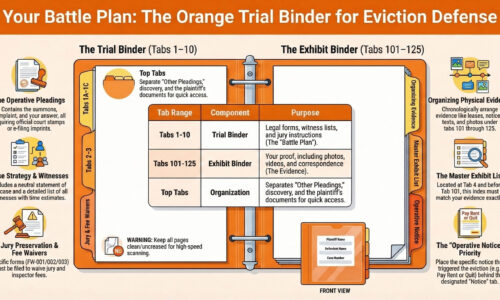
The Orange Binder, also referred to as a notebook, serves as a comprehensive “battle plan” and guide for tenants, judges, and juries during an eviction trial. It is structured into two primary components: the Trial Binder (Tabs 1–10) and the Exhibit Binder (Tabs 101–125). The binder’s organization is intended to signal to the court and opposing counsel that the tenant is well-prepared, has legal support, and cannot be easily pressured into a disadvantageous settlement. Beyond mere organization, the binder forces tenants to critically think through the landlord’s accusations and identify the legal defenses and evidence required to counter them.
Actionable Steps for Tenants
To effectively utilize the binder and prepare for court, tenants should follow these specific steps:
- Initial Setup and Organization:
- Complete the front sheet of the binder with the plaintiff’s name, defendant’s name, and case number; if names were misspelled in the original summons, they must be misspelled on the binder as well.
- Fill in the “short titles” (last names of both parties) and case numbers on all 12 pages of the LA Civ forms.
- Organize all evidence—including photos, videos, texts, emails, and notices—under tabs 101–125.
- Document Management:
- Place the Summons and Complaint behind Tab 1A and the Answer behind Tab 1B.
- Identify the operative notice (e.g., notice to pay rent or quit) and place the “Notice” tab directly in front of it within the complaint exhibits.
- Move non-essential papers like the “Notice of Case Assignment” or “Civil Case Cover Sheet” to the “Other Pleadings” tab to keep the main sections clean.
- Legal Protections and Fees:
- Verify that a jury trial has been demanded in the Answer or via a separate demand form.
- Ensure fee waivers (Forms FW-001, FW-002, and FW-003) are filed and stamped by the court, specifically checking boxes for jury fees and inspector/investigator fees.
- Read the Standing Orders (the “rules of the game”) provided with the summons to understand the specific requirements for your courthouse.
- Trial Preparation (Tabs 2–10):
- Witness List (Tab 3): List every possible witness, what they will testify about, and realistic time estimates for their testimony.
- Exhibit List (Tab 4): Create a list of the specific documents intended for use at trial; this list must be updated if any changes are made to the exhibit notebook.
- Jury Instructions (Tab 5) and Verdict Form (Tab 6): Use the provided templates and attend classes to help draft these documents, which define how the jury will evaluate the case.
- Ongoing Communication:
- Attend Tenant Empowerment (TEP) classes and webinars regularly to understand the “16 factors” of your case and negotiation strategies.
- Maintain daily communication with your legal team via text strings at 10:00 a.m. to report new documents or request “Step 10” and “Step 15” binder reviews.
Conclusion
The ultimate goal of the orange binder system is to empower tenants to be independent and trial-ready. By meticulously organizing evidence and following procedural requirements, tenants can negotiate from a position of strength or effectively present their case to a jury. Success in the program requires a commitment to being “a winner, not a whiner,” which involves watching the instructional videos, attending classes, and ensuring every document in the binder is accurate and court-stamped. Ultimately, the binder is designed to ensure that if a case does not settle on the tenant’s terms, they are prepared for a lawyer to potentially step in and represent them at trial.
Curriculum
- 1 Section
- 9 Lessons
- Lifetime